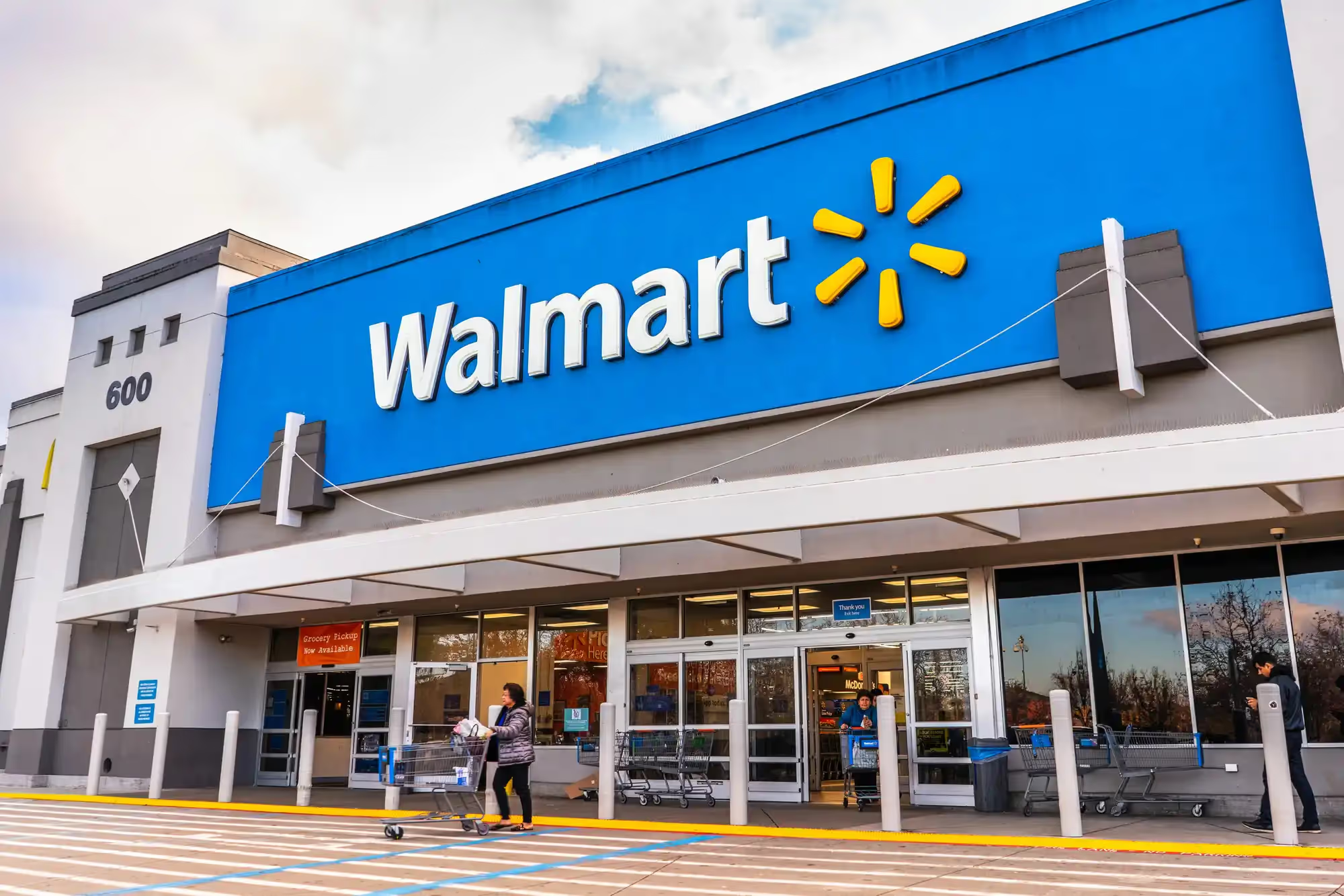
WMT (+6.8%) big takeaways
Takeaways:
- There were some bright spots in discretionary (e.g. back-to-school) but by and large things were soft
- Self-help story where WMT executed to perfection (inventory, margin, share gains, share repurchase)
- On the surface, reads are good for TGT and COST but I’d be careful of reading too much into them from this quarter, which was more idiosyncratic than normal
Investment implications:
This was an excellent quarter from Walmart where they ticked every box. Inventory came down in remarkable fashion and is now roughly in line with revenue growth. I expect markdowns to decelerate significantly (and maybe even decline sequentially). This should further boost margins; in fact, I think WMT could post Y/y margin increases in its critical FQ4.
Customers are responding to sales and events. Spending around back-to-school was strong and the holidays appear to be off to a surprisingly good start. Walmart is gaining market share with consumers making >$100k/year. And while there is trade-down and customers are mixing toward lower-margin grocery items (from higher margin general merchandise) I am very encouraged that the company has been able to improve its gross margin trend in light of that.
Inflation continues to be an issue. Ticket was up +6% in the quarter in the US and that wasn’t enough to offset cost inflation pressures. But Walmart is increasingly demonstrating itself to be the place of everyday low price; that message appears to be resonating with consumers.
With respect to other retailers, I think the read is mixed. Target mixes more toward general merchandise and while they are strong at events, this quarter was more about WMT self-help (inventory), grocery and higher-end consumers rather than overt strength in the American consumer. Gun to my head, TGT is poised to do well. But I would not go out on a limb and they could well have actually lost share. COST is a conundrum. While the Sam’s Club acceleration and the mix should bode well for COST, we saw the deceleration in October and that gives me pause for thought. I would not add to COST here.
As a sidenote, Walmart took a $3.1b charge related to the ongoing opioid issues. But that was known and excluded from the adjusted results. The company has approved a new $20b share repurchase program.
Headlines
Results
- EPS: $1.50 vs. est. $1.32
- Revenue: $152.8b vs. est. $147.9b
- E-commerce: +16% vs est +17% (last, +12%)
- Inventory: +13% Y/y vs. +25% Y/y in FQ2 (+32% in FQ1)
Segments:
- Grocery: up mid-teens, acceleration from +LDD, led by food (+mid-teens, with share gains).
- Health/wellness: up HSD, consistent with Q2, due to favorable mix, branded drug inflation, flu vaccines, partially offset by lower COVID vaccines
- General merchandise: down LSD, better than down MSD in Q2 (which itself improved from down LDD in Q1)
- Softness in electronics, apparel and home
- Strength in auto, lawn & garden, and back-to-school
Operating margin:
- 3.94%, down from 4.12% Y/y (decline of 18bps much better than -69bps in FQ2 and -124bps in FQ1)
- Gross margin (US): 77bps (better than -106bps Q/q) due to:
- Increased general merchandise markdowns (especially in apparel)
- Category mix shifts toward grocery, away from general merchandise
- Offset by pricing
- Operating expense rate: -60bps (better than -21bps in Q2 and +95bps in Q1)
- Lower COVID costs, higher sales
FY23 Earnings guidance:
- down 6-7%, vs prior guide down 9-11% (implies $6.01-$6.07 vs. est. $5.85)
- Walmart US Comps: +5.5%, up from +4.0%
- US comps in the FQ4: +3%, reiterated (est. +3.2%)
- Operating Income: Down 6.5-7.5%, better than guide of down 9-11%
- Organic, down 5.5-6.5%, (better than guide 8-10%)
- Total revenue: +5.5%, up from 4.5% (organic up 6.5%, up from +5.5%)